

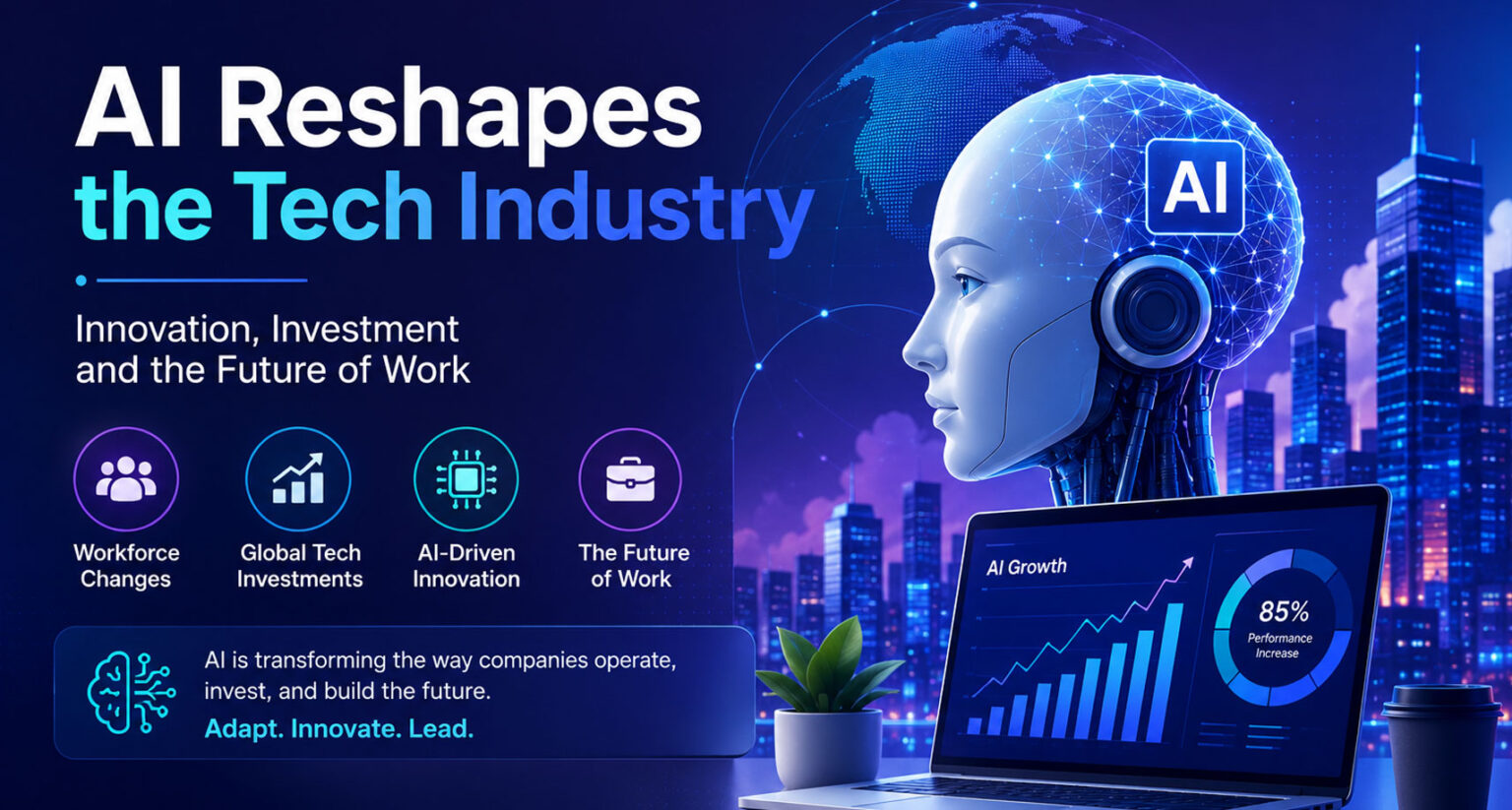
Artificial intelligence is reshaping the technology industry at an unprecedented pace. Companies across the world are integrating AI into their products, services, and business operations to improve efficiency, reduce costs, and create new opportunities for growth.
From software development and cloud computing to customer support and data analysis, AI has become a key driver of innovation. Businesses are no longer viewing artificial intelligence as an optional technology—it has become a strategic investment for long-term success.
The Rise of Enterprise AI Reshapes
Organizations are increasingly adopting AI-powered platforms to streamline workflows and improve productivity. Enterprise AI enables businesses to automate repetitive tasks, analyze large volumes of data, and make faster, data-driven decisions.
Companies are using AI for:
- Business automation
- Customer support
- Software development
- Sales forecasting
- Marketing optimization
- Financial analysis
- Human resource management
- Data processing
As AI technology continues to mature, enterprise adoption is expected to expand across nearly every industry.
Growing Investment in Artificial Intelligence
Technology companies and investors continue to invest heavily in AI infrastructure, research, and product development. Billions of dollars are being allocated to cloud computing, AI chips, data centers, and next-generation software platforms.
Major areas receiving investment include:
- AI infrastructure
- Cloud computing
- Machine learning platforms
- AI-powered software
- Large language models
- Business automation tools
- Intelligent search systems
- AI security solutions
These investments demonstrate growing confidence in AI as one of the most influential technologies of the coming decade.
AI Is Changing the Workplace
Artificial intelligence is transforming how employees work rather than simply replacing traditional jobs. Modern AI tools help professionals complete repetitive tasks more efficiently, allowing them to focus on strategic thinking and creative problem-solving.
Businesses are adopting AI to improve:
- Workflow efficiency
- Team collaboration
- Customer experience
- Productivity
- Decision-making
- Operational performance
As organizations embrace AI, employees are also developing new skills to work alongside intelligent technologies.
How AI Reshapes Software Development
AI reshapes modern software development by helping developers build applications faster, improve code quality, and automate repetitive programming tasks. AI-powered coding assistants can generate code, identify bugs, suggest improvements, create documentation, and support testing throughout the development process. As businesses continue adopting intelligent technologies, AI reshapes the way software teams collaborate, innovate, and deliver high-quality applications more efficiently.
Some of the key benefits include:
- Faster development cycles
- Improved code quality
- Automated testing
- Better documentation
- Reduced development costs
- Increased developer productivity
- Smarter debugging and code suggestions
- Improved team collaboration
As AI reshapes the technology industry, software engineering teams are using AI-driven tools to increase productivity, reduce manual effort, and accelerate digital innovation. These advancements are helping organizations build reliable software while adapting to the rapidly evolving demands of the modern technology landscape.
AI and Cloud Computing
Cloud platforms have become the foundation for AI innovation. Businesses rely on cloud infrastructure to train machine learning models, process massive datasets, and deploy AI-powered applications at scale.
Cloud-based AI provides:
- High-performance computing
- Flexible scalability
- Faster deployment
- Global accessibility
- Cost-efficient infrastructure
- Secure data management
The combination of AI and cloud computing is enabling businesses to innovate faster than ever before.
Opportunities for Businesses
Artificial intelligence offers significant advantages for organizations willing to embrace digital transformation.
Businesses can benefit from:
- Reduced operational costs
- Improved customer satisfaction
- Faster business growth
- Better business insights
- Increased efficiency
- Smarter automation
- Competitive advantage
- Enhanced innovation
Companies that successfully integrate AI into their operations are better positioned to adapt to changing market demands.
Challenges Businesses Must Consider
While AI presents enormous opportunities, successful adoption also requires careful planning.
Organizations should focus on:
- Data privacy
- Cybersecurity
- Responsible AI usage
- Employee training
- Regulatory compliance
- Ethical AI practices
- Infrastructure planning
- Long-term scalability
Balancing innovation with responsible implementation is essential for sustainable growth.
What the Future Looks Like
Artificial intelligence will continue to transform industries by making technology smarter, faster, and more accessible. Businesses that invest in AI today are building a strong foundation for future innovation.
Emerging technologies such as intelligent automation, generative AI, predictive analytics, and autonomous systems will continue to reshape how organizations operate and compete in the digital economy.
As AI capabilities evolve, businesses and professionals who embrace continuous learning and innovation will be better prepared for the future.
Final Thoughts
Artificial intelligence is no longer a technology of the future—it is shaping the present. From enterprise software and cloud computing to automation and software development, AI is influencing nearly every aspect of the technology industry.
For businesses, adopting AI is about more than improving efficiency. It is an opportunity to innovate, scale operations, deliver better customer experiences, and remain competitive in an increasingly digital world.
As the technology continues to evolve, AI will play an even greater role in defining the future of business, innovation, and global technology.